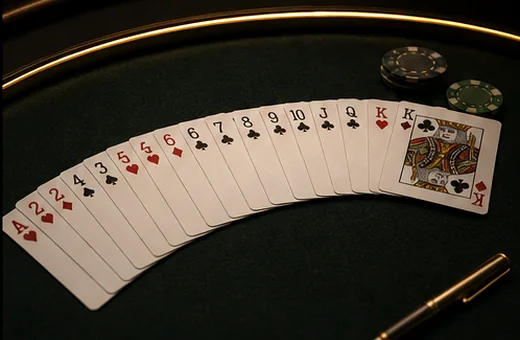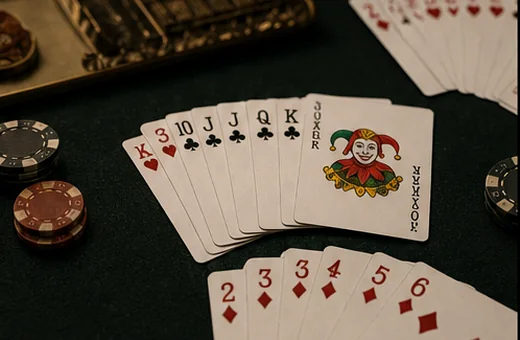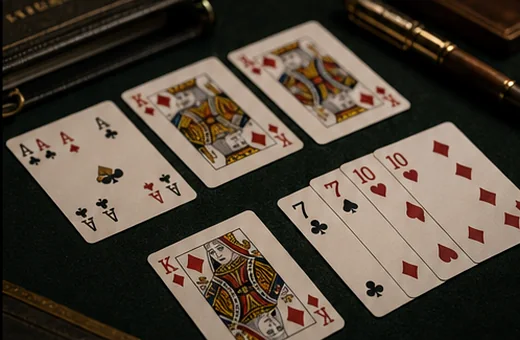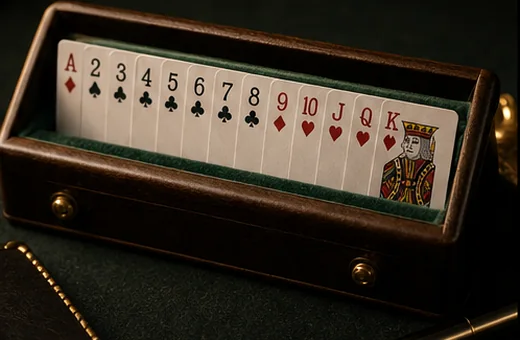
Table setup
How many decks do you need for 13-card Indian Rummy?
Match the deck count to the number of players before dealing. The table or app rule shown for the current room is always the final authority.
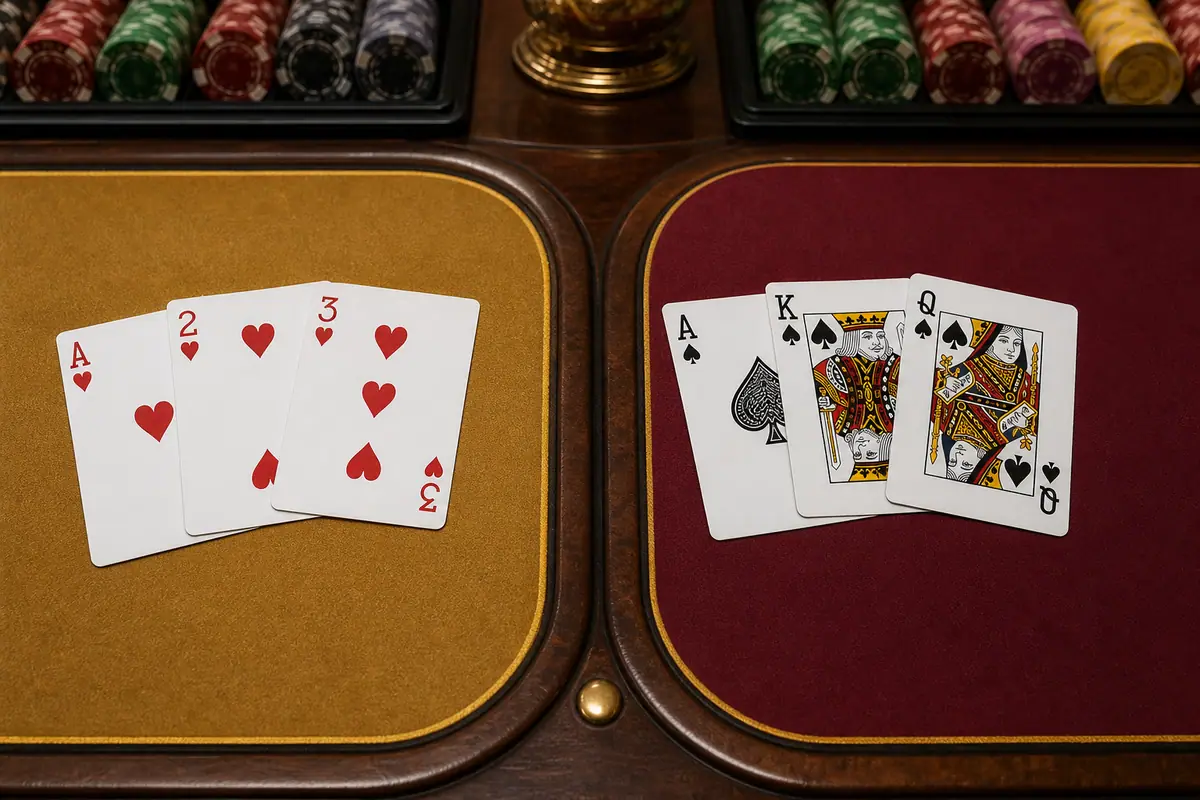
Direct answer: A common published setup uses two standard 52-card decks, plus printed jokers, for two to four players and three decks for five players. This is not universal: apps and home tables may cap player numbers or use a different joker count, so confirm the room rules before the first deal.
Quick player-to-deck table
| Players | Common setup | Check before play |
|---|---|---|
| 2 | 2 decks | Printed joker count |
| 3 | 2 decks | Seat and deal order |
| 4 | 2 decks | Closed-pile size |
| 5 | 3 decks | Whether the room allows five |
Why the count changes
Each player receives thirteen cards, while the table still needs a useful closed pile for later draws. More players consume more cards at the deal, so an extra deck prevents the stock from becoming too shallow. Multiple copies of the same rank and suit are therefore normal in multi-deck Indian Rummy.
Do this before dealing
- Count the seated players.
- Confirm how many printed jokers are included.
- Read the room’s wild-joker and reshuffle rules.
- Deal thirteen cards to each player only after the setup is agreed.
Worked setup: four adults at one table
Four players receive 52 cards in total: thirteen each. With two 52-card decks, the undealt cards still provide a usable closed pile after one card starts the open pile and any printed jokers are included. The dealer should shuffle the combined pack thoroughly so cards from the two decks are not left in blocks.
Suppose two copies of 8♣ appear during the round. That is expected in a two-deck game; it does not automatically signal an error. Treat them as two physical cards. A declaration still cannot count the same physical 8♣ twice, and the table’s rules decide which duplicate combinations are accepted in sets.
Common setup mistakes
- Using one deck for four players: the initial deal consumes every card, leaving no proper stock.
- Adding an extra deck but not reshuffling: this creates predictable blocks rather than a fair mixed pack.
- Forgetting printed jokers: the physical joker count changes the available substitutes.
- Copying a five-player rule into an app: a digital room may support fewer seats even if a home variant allows five.
When the closed pile runs low
Do not silently add another deck mid-round. Follow the table’s stated stock-exhaustion rule; one documented form treats a finished stock as a void deal, while some home tables reshuffle eligible discards. Agreeing on that procedure before play prevents the result from changing after players have seen cards.
Source and rule boundary
PlayRummy’s published how-to-play rules describe two decks for two to four players and three decks for five. Other recognized variants differ, so this page explains a common setup rather than replacing an app or house rule.