FAQ
Indian Rummy beginner FAQ
Quick answers on 13-card deal, pure sequence, sets, jokers and declare — the most common beginner questions in one searchable board.
- Indian Rummy beginner FAQ India
- Indian Rummy beginner FAQ 2026

No matching questions — try another keyword or open the Open practice guide.
How many cards does each player get in 13-card Indian Rummy?
Every player receives 13 cards after the deal. Two decks plus jokers are shuffled.
How many players can join?
Usually 2 to 6 players. Confirm lobby rules on your table.
What is a pure sequence?
Three or more consecutive cards in one suit with no joker inside the run. See our pure sequence guide.
Pure vs impure sequence?
An impure sequence can use a joker substitute; a pure sequence cannot include any joker in the run.
What is a set?
Three or four cards of the same rank in different suits. Two same-suit cards never form a set.
Printed joker vs wild joker?
The printed joker is fixed; the wild joker rank is chosen each deal. Both can substitute in impure melds, not inside a pure sequence.
How do you declare?
When all 13 cards sit in valid sequences or sets — including at least one pure sequence — press declare. Wrong declare can cost penalty points.
Can you discard the card just picked from the open deck?
Standard rule: you cannot discard that same card on the turn you picked it from the open pile. Full rule.
Does this site guarantee real-cash wins?
No — this is rules learning and adult social practice only. No guaranteed outcomes.
Practice beginner FAQ topics at home
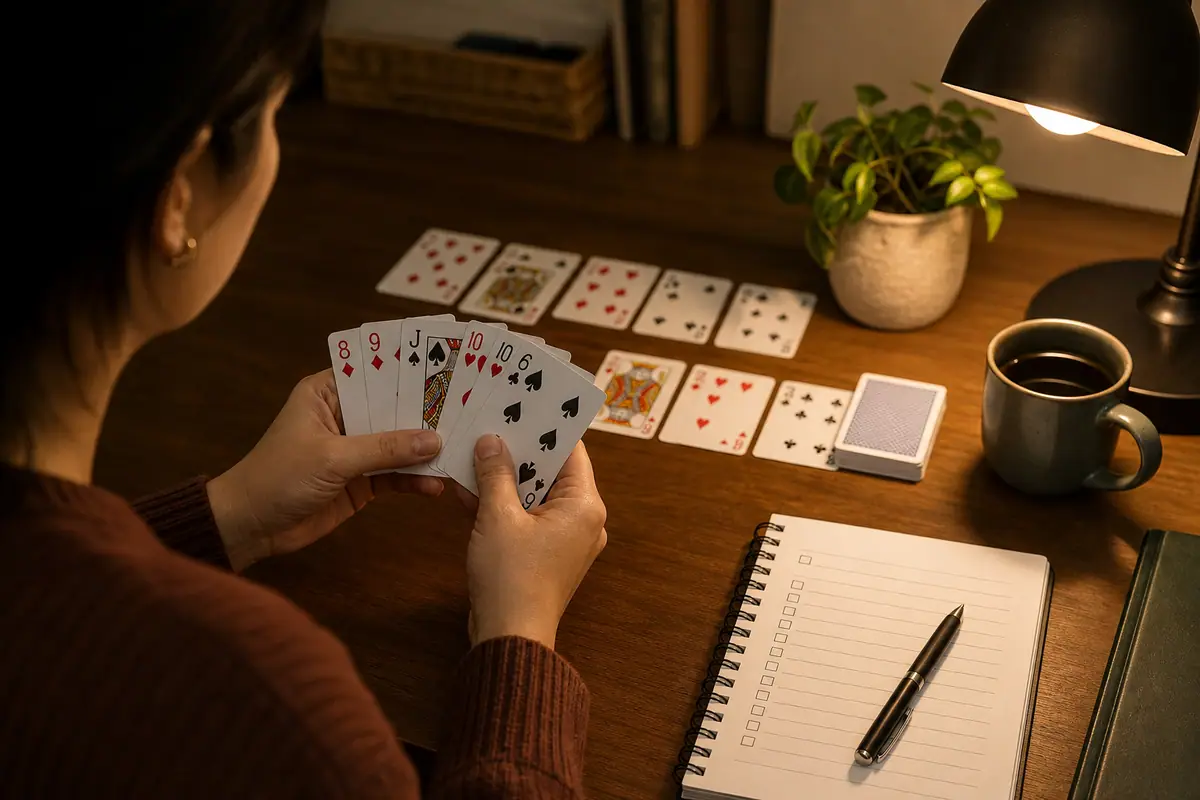
Pick three beginner questions from this board each week — cards dealt, pure sequence, declare — and answer them aloud with a real 13-card practice hand. Focus on beginner questions, searchable rule answers and safe practice paths so you learn rules before joining any cash lobby.
When you test a declare, run a five-second checklist: count cards, confirm the pure run has no joker, and verify every rank sits in a legal meld. If validation fails, note which FAQ topic you misunderstood and replay the same board in free mode until the answer sticks.
For family practice nights, use virtual points only and let one player call “declare audit” before anyone finishes. That habit mirrors live-table pressure while keeping the room social and low stakes — no cash promises or guaranteed-win talk.
Need step-by-step rules?
Open the beginner guide or pure sequence hub for visual card examples.
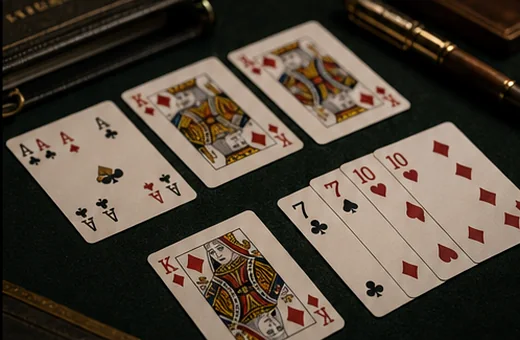
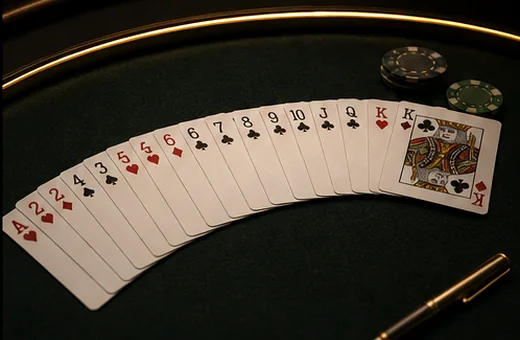
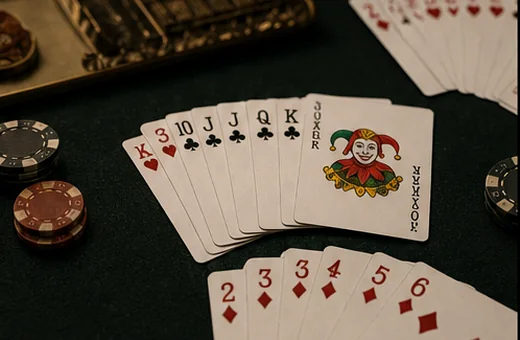
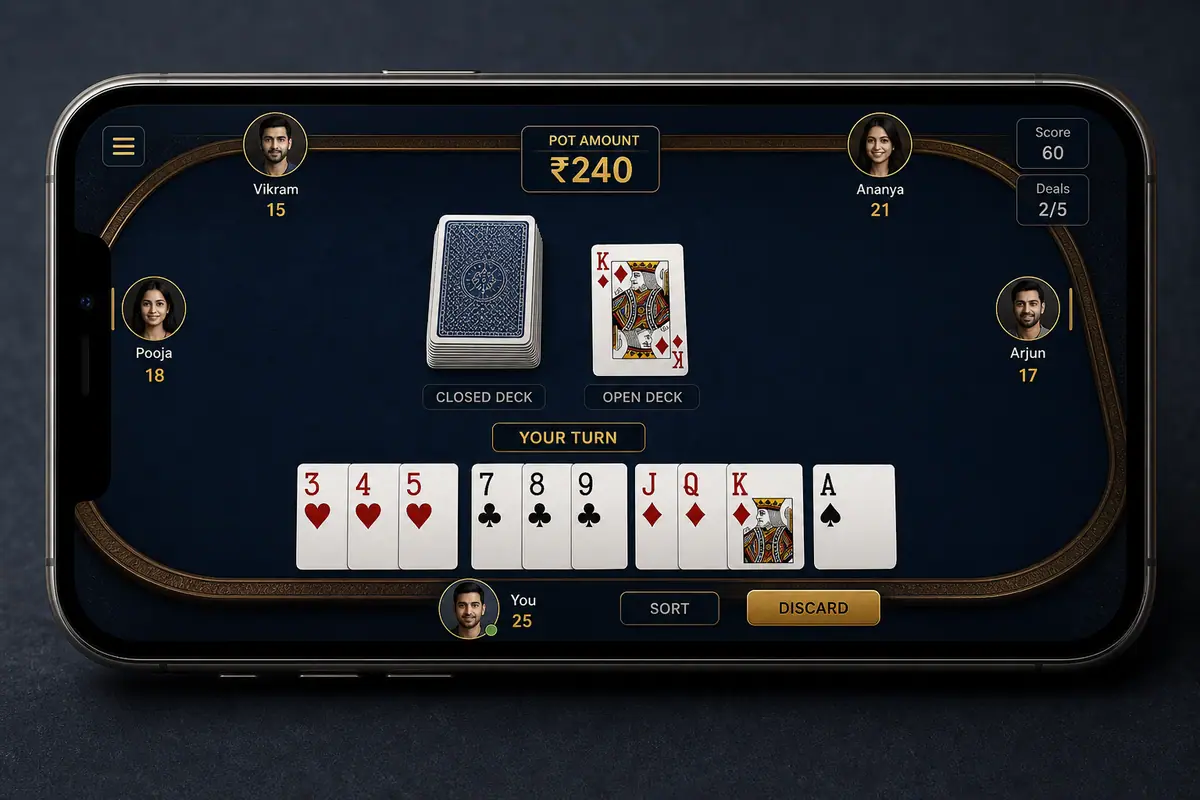
Sequence desk image set
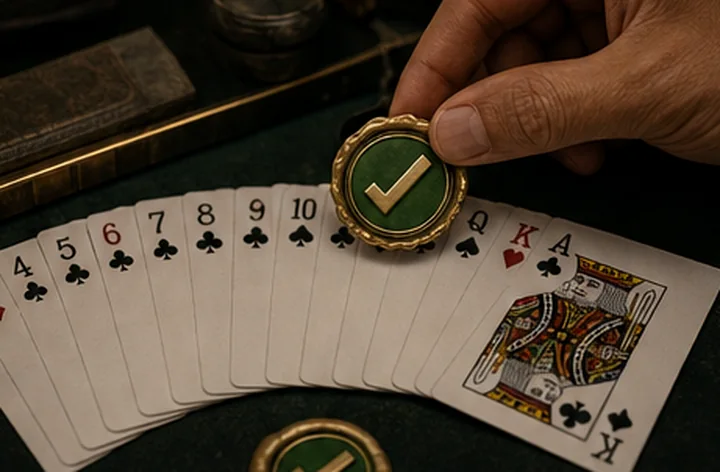
Dark felt, gold verification cues and realistic Indian Rummy card groups support the rule lesson on this page.